
A roleplay dining experience in Second Life is a social dining event where guests, staff, and the restaurant environment work together to create the feeling of a night out. Many newcomers assume it is primarily about acting or staying in character, but most experiences focus far more on conversation, hospitality, atmosphere, and shared participation than performance.
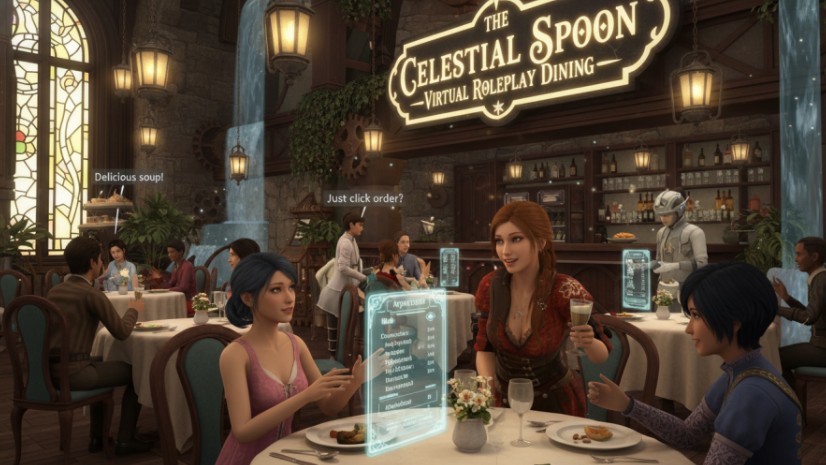
The Question Many Newcomers Are Afraid to Ask
What exactly am I supposed to do when I get there?
For many people who hear about roleplay dining in Second Life for the first time, that question appears almost immediately. The idea sounds interesting. A virtual restaurant where people gather, interact, and share a meal through their avatars certainly sparks curiosity. Yet curiosity is often followed by uncertainty. Will everyone else know what they’re doing? Is roleplay required? What if you say the wrong thing or don’t understand how it works?
Those concerns are completely normal.
In fact, one of the biggest surprises about roleplay dining is that the experience is usually much less intimidating than newcomers imagine. While every venue has its own personality and style, many roleplay restaurants are built around something people already understand remarkably well: the experience of going out to dinner.
The difference is that instead of food and service existing only in the physical world, the atmosphere, hospitality, conversation, and imagination work together to create the experience.
Once you understand what actually happens during a typical visit, much of the mystery disappears.
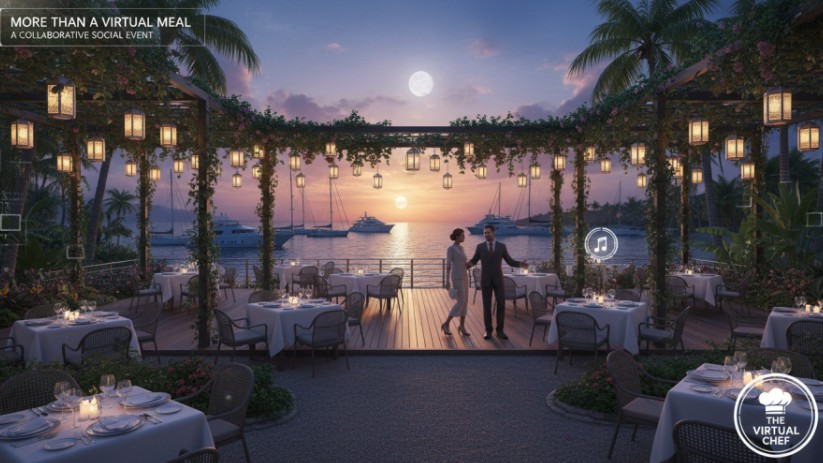
Why Roleplay Dining Feels Mysterious From the Outside
Part of the confusion comes from the word “roleplay.”
For some people, roleplay brings to mind elaborate costumes, complicated storylines, or theatrical performances where everyone must stay perfectly in character. Others assume they need acting experience or detailed knowledge of Second Life culture before participating.
Neither assumption tells the full story.
Many roleplay dining experiences operate on a much more approachable level than newcomers expect. Rather than focusing on perfect performance, they often encourage participation, conversation, and shared interaction.
Think about attending a themed dinner event in the physical world. You do not need to become a professional actor to enjoy the experience. You simply engage with the environment, interact with the people around you, and allow yourself to become part of the atmosphere.
Roleplay dining works in a similar way.
Some guests create detailed characters and immerse themselves deeply in the setting. Others participate more casually, responding naturally to hosts, servers, entertainers, and fellow diners. Both approaches can fit comfortably within many dining experiences.
Much of that uncertainty begins to fade once people see how roleplay dining actually unfolds. While the setting may be virtual, many of the interactions follow familiar social patterns that most people already understand.
More Than a Virtual Meal: Understanding What Guests Are Really Participating In
At its heart, a roleplay dining experience is a collaborative social event where the atmosphere, the setting, and the people all play an important role in shaping the evening. The restaurant provides the backdrop, the staff create a sense of hospitality, and the guests bring the conversations, personalities, and interactions that make each visit unique.
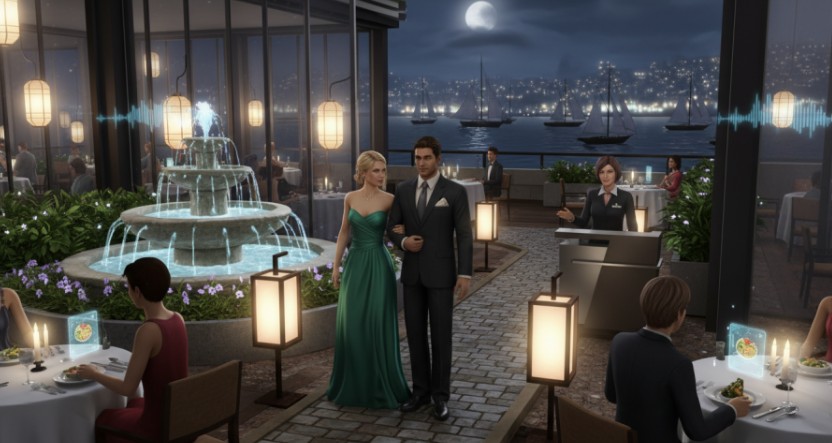
Imagine arriving at an elegant waterfront restaurant where soft music drifts through the air, lanterns cast a warm glow along a garden path, and tables overlook a moonlit harbor.
A host greets guests at the entrance and escorts them to their table, setting the tone for the evening ahead. While none of these details provide a physical meal, they create something many people find just as valuable: the feeling of sharing a special occasion with others. This is where newcomers sometimes misunderstand virtual dining.
The experience is not centered on consuming food, but on participating in a carefully crafted social environment where conversations unfold naturally, friendships are formed, and memorable moments emerge through interaction. Much like a theater production, the restaurant provides the stage, but the guests help bring the evening to life.
Every conversation, joke, story, and shared experience contributes to an atmosphere that feels engaging, personal, and surprisingly real. Even a simple dinner can become memorable when everyone participates in creating the experience together.
Walking Through the Door: What Happens When You First Arrive
Without reading a single instruction, you already understand something important: this is a restaurant, and the environment itself is teaching you how to behave within it. Just as in the physical world, people naturally take cues from their surroundings.
The architecture, lighting, landscaping, music, and décor all work together to establish expectations before a single conversation takes place. A beachfront café encourages a relaxed and casual atmosphere, while a formal fine dining venue suggests a slower, more refined experience.
A medieval tavern invites playful roleplay, while a luxury rooftop restaurant creates an entirely different mood. Shortly after arriving, a host or greeter may welcome you, answer questions, and help you settle in.
For many first-time guests, this interaction provides immediate reassurance. There is no need to figure everything out alone. Well-run venues understand that newcomers may feel uncertain, and experienced staff are often happy to explain procedures, answer concerns, and guide guests through the experience. Within just a few minutes, what initially felt unfamiliar often begins to feel surprisingly comfortable and intuitive.
Menus, Servers, and Conversation: The Familiar Rhythm of the Experience
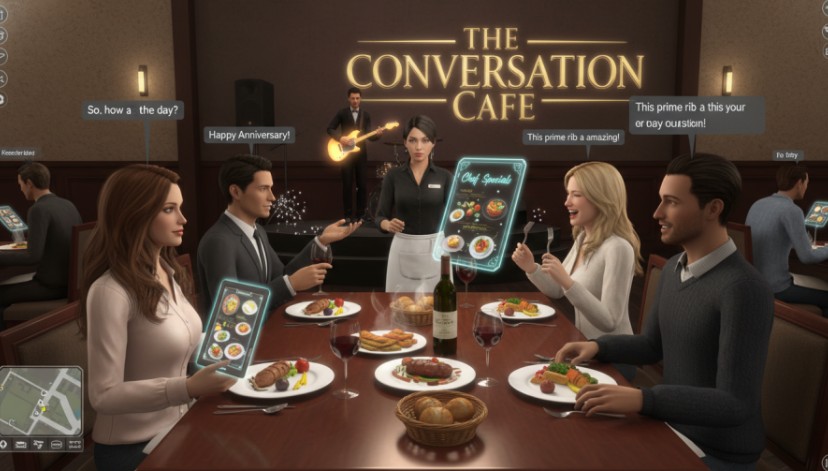
Once seated, something interesting begins to happen: the experience starts to feel surprisingly familiar. Menus are presented, servers introduce themselves, drinks are offered, and food orders are taken while conversation naturally develops around the table.
This rhythm closely resembles a traditional restaurant because it is intentionally designed to do so. Many roleplay dining venues use menus, animations, props, and interactive systems to help create a sense of immersion. A guest might click a menu to receive a beautifully presented meal, watch their avatar sip a glass of wine, or raise a toast during a special celebration. While these features add visual realism, their greater purpose is to support the atmosphere surrounding the meal rather than replace it.
As the evening unfolds, servers may describe the chef’s specials, guests may share stories about their day, and live musicians or entertainers may add energy to the room. Friends gather to celebrate birthdays, anniversaries, engagements, and other meaningful occasions, creating moments that feel genuine despite taking place in a virtual setting.
The technology helps establish the environment, but it is the human interaction that gives the experience its value. Conversation becomes the thread that ties everything together, transforming a simple meal into a memorable social event where the restaurant provides the setting and the people bring the evening to life.
The Moment Many Beginners Relax
There is often a particular moment during a first visit when something shifts. The newcomer stops worrying about whether they are doing everything correctly and begins settling into the experience.
That realization can happen in different ways. They may notice that no one expects perfect roleplay, see other guests casually enjoying conversation, or discover that the staff are patient, welcoming, and happy to help. Whatever sparks the change, the evening suddenly feels less like an unfamiliar activity and more like a social gathering among friends. This is one of the most important discoveries first-time guests make. Roleplay dining is often easier to understand through participation than through preparation.
By observing how others interact, responding naturally, and engaging at their own comfort level, newcomers gradually find their footing. There is no test to pass and no performance to perfect.
As the meal continues, attention shifts away from concerns about “doing it right” and toward the conversations, laughter, and connections developing around the table. What began as uncertainty slowly transforms into genuine engagement, allowing the experience to feel comfortable, natural, and enjoyable.
The short answer is no—at least not in the way many newcomers imagine. Being “good” at roleplay dining rarely involves delivering dramatic performances, speaking in character for hours, or inventing elaborate fictional backstories. In most venues, success comes from something much simpler: a willingness to engage with the experience and the people around you.
That may mean greeting your server, participating in conversation, responding to questions, appreciating the setting, and contributing to the atmosphere in whatever way feels natural. Some restaurants encourage deeper character development, while others focus primarily on hospitality and social interaction.
Many allow guests to participate at a level that matches their comfort and experience. A helpful way to think about roleplay dining is not as acting but as collaborative imagination. Each person contributes a small piece of the evening, and together those contributions create an experience that feels larger and richer than any individual could create alone.
In the end, the most valuable skill is not performance but presence. Guests who are willing to engage, listen, converse, and enjoy the moment often discover that they already have everything they need to participate successfully.
What Turns a Restaurant Into an Experience
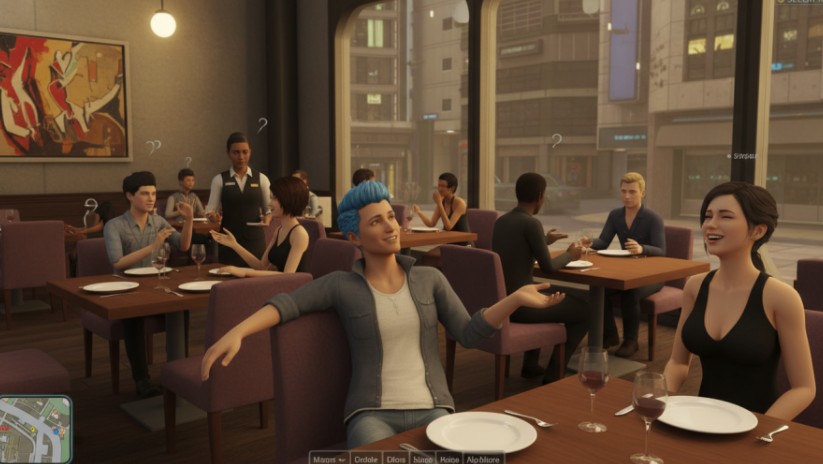
If roleplay dining is not really about the food itself, what keeps people coming back? The answer lies in the combination of atmosphere and participation. A well-designed restaurant does far more than provide tables, chairs, and menus. It creates an environment that encourages people to interact, connect, and become immersed in the experience. Lighting helps establish mood, music influences emotional tone, architecture shapes expectations, and staff set the standard for hospitality.
At the same time, guests contribute their own energy, personalities, and conversations, helping transform the space from a beautiful setting into a living social environment. Even seemingly small details can have a surprisingly powerful effect.
A winding garden path leading to the entrance, a pianist performing softly in the background, a sunset visible through panoramic windows, or a chef stopping by to greet guests between courses all add layers to the experience. The most memorable venues understand that immersion is rarely created by one spectacular feature.
Instead, it emerges from dozens of thoughtful details working together to create a place that feels meaningful and alive. This is why roleplay dining often feels so different from simply visiting a virtual building. The environment is not designed merely to be seen—it is designed to be experienced.
Why People Keep Coming Back Long After the Meal Ends
If roleplay dining were only about virtual food, the experience would likely lose much of its appeal after a few visits. What keeps many guests returning is something deeper than the meal itself.
Over time, restaurants can become familiar gathering places where guests recognize staff members, develop favorite tables, and look forward to seeing people they have met during previous visits. Much like a favorite neighborhood restaurant in the physical world, these virtual venues often create a sense of comfort and belonging that extends beyond the dining experience itself.
Another reason people return is that no two evenings are ever exactly the same. Every group of guests brings different stories, personalities, conversations, and energy to the table. A quiet dinner with close friends may create a completely different atmosphere than a lively celebration filled with new faces and spontaneous conversations.
This unpredictability keeps the experience fresh and gives each visit its own character. For some residents, roleplay dining serves as a relaxing social outlet after a busy day. For others, it is a creative hobby that allows them to participate in immersive environments and shared storytelling.
Some enjoy the hospitality aspect, while others simply appreciate having a welcoming place where meaningful conversations can happen naturally. The common thread connecting all of these motivations is not the food itself but the shared experience. People return because they enjoy spending time in environments where atmosphere, interaction, creativity, and community come together in ways that feel engaging and memorable.
From Uncertainty to a Seat at the Table
At the beginning of this article, there was a simple question: What exactly happens during a roleplay dining experience? The answer turns out to be both straightforward and surprisingly human. You arrive at the restaurant, are welcomed by staff, shown to your table, place an order, and spend time interacting with the people around you.
While the setting may exist in a virtual world, the core experience is built around many of the same social rituals that make dining out enjoyable in the physical world. Conversation, hospitality, celebration, and connection remain at the center of the experience.
Although every venue has its own style, theme, and approach to roleplay, most successful dining experiences share a common goal: creating an environment where guests can relax, participate, and enjoy the company of others. The invitation is not to perform flawlessly or become an expert roleplayer overnight.
It is simply to take part. Understanding how the experience works removes much of the uncertainty that often prevents newcomers from trying it in the first place. And once that uncertainty begins to fade, many first-time guests discover something reassuring.
They do not need special skills, extensive preparation, or years of roleplay experience to enjoy themselves. More often than not, they already know everything they need to know. All that remains is to take a seat at the table, join the conversation, and allow the evening to unfold naturally.